
Bienvenidos a mi blog Infección de las vías urinarias: Guía médica para hombres con síntomas


+57 300 693 8413
Bienvenidos a mi blog

As a urologist, I frequently meet patients who come to my office concerned about urinary changes that they initially considered part of normal aging. In many cases, these symptoms are related to prostatic hyperplasia, a common condition characterized by the progressive enlargement of the prostate gland. Clinically, this enlargement becomes relevant when it interferes with the normal flow of urine, affecting daily comfort, sleep quality, and overall well-being. While some degree of prostate growth is expected over time, pathological enlargement differs in that it produces persistent symptoms that should not be ignored. Given its high prevalence among aging men, prostatic hyperplasia represents one of the most frequent reasons for consultation in urological practice.
Early evaluation is essential, as timely diagnosis allows us to distinguish between physiological changes and conditions that require medical attention. When assessed appropriately, we can prevent complications and preserve quality of life through individualized care. I am Carlos Velásquez, and throughout my clinical experience, I have focused on helping patients understand their prostate health with clarity, accuracy, and confidence. In this article, I will guide you through everything you need to know about this condition, from its medical foundations to its real impact on everyday life, so you can make informed decisions about your health.
Bienvenidos a mi blog Infección de las vías urinarias: Guía médica para hombres con síntomas

Bienvenidos a mi blog Vasectomy in Colombia: A Safe, Affordable Option for International Patients If

Bienvenidos a mi blog Me salió el PSA alto ¿Qué significa y qué debo hacer
To properly address prostate health, it is essential to understand what causes benign prostatic hyperplasia and why this condition develops progressively over time. From a medical standpoint, prostatic hyperplasia causes and symptoms are closely linked to physiological, hormonal, and metabolic changes that occur as men age. Rather than being the result of a single trigger, this condition emerges from a combination of biological and lifestyle-related factors that gradually influence prostate growth.
One of the primary causes of benign prostatic hyperplasia is hormonal variation associated with aging. As men grow older, testosterone levels slowly decline; however, the prostate remains highly sensitive to dihydrotestosterone (DHT), a metabolite derived from testosterone. DHT plays a central role in prostate cell growth and maintenance. Over time, prolonged exposure to DHT stimulates excessive cellular proliferation within the prostate, leading to enlargement.
Age is, therefore, the strongest and most consistent risk factor. While prostate growth may begin subtly in early adulthood, clinically significant prostatic hyperplasia most often develops after the age of 50. This explains why symptoms tend to appear later in life and progress gradually rather than abruptly.
In my clinical experience, family history is another relevant contributor. Men with close relatives affected by prostate enlargement are more likely to develop the condition themselves, suggesting a genetic predisposition. However, genetics alone do not determine outcomes.
Lifestyle factors also play a meaningful role in the development of prostatic hyperplasia causes and symptoms. A sedentary routine, excess body weight, and poor metabolic health can promote chronic inflammation and hormonal imbalance, both of which negatively affect prostate tissue. Obesity has been associated with more severe symptoms and faster progression of the condition.
Many patients ask whether benign prostatic hyperplasia is hereditary, and the answer is that genetics can play a role, but it is not the only determining factor. Clinical evidence shows that men with a family history of prostate enlargement may have a higher risk of developing the condition, often at an earlier age or with more pronounced symptoms. This suggests that inherited traits can influence how prostate tissue responds to hormonal changes over time.
However, heredity alone does not guarantee that prostatic hyperplasia will occur. Aging, hormonal balance, lifestyle factors, and metabolic health remain central contributors. For this reason, men with a family history of prostate conditions should be especially attentive to early urinary symptoms and consider regular urological evaluations. Early assessment allows timely diagnosis and appropriate management, regardless of genetic background.
Certain chronic diseases are increasingly recognized as contributors to prostate enlargement. Cardiovascular disease and diabetes are frequently associated with prostatic hyperplasia, largely due to their impact on blood flow, inflammation, and hormonal regulation. Additionally, metabolic syndrome—which includes insulin resistance, hypertension, and dyslipidemia—has been linked to increased prostate volume and more pronounced urinary symptoms.
Understanding these interconnected factors allows us to approach prostate health in a comprehensive way. Identifying the root causes is the first step toward effective evaluation, symptom control, and long-term management of this common condition.
you might be interested: How Much Does Erectile Dysfunction Treatment Cost? Expert Insights from a Urologist
One of the most important aspects of prostate health is learning to correctly identify the symptoms of benign prostatic hyperplasia. In my daily clinical practice, I often emphasize to patients that this condition does not appear suddenly; instead, it develops gradually, and its warning signs are frequently underestimated. These benign prostatic hyperplasia signs reflect the progressive obstruction of the urinary tract and should always be interpreted as signals that the prostate is no longer functioning normally.
Understanding prostatic hyperplasia symptoms allows patients to seek care earlier, when treatment options are broader, less invasive, and more effective.
In the early stages, symptoms are usually functional rather than painful, which explains why many men delay consultation. A weak urine stream is often the first noticeable change, characterized by reduced force and prolonged voiding time. This is commonly accompanied by difficulty starting urination, especially after periods of bladder filling, such as in the morning or after long meetings.
As the prostate continues to enlarge, urinary frequency and urgency increase. Patients may feel a sudden need to urinate with little warning, even when the bladder is not full. These early prostatic hyperplasia symptoms can interfere with work, travel, and social activities, subtly but progressively reducing quality of life.
When prostate enlargement becomes more pronounced, symptoms intensify and begin to affect nighttime rest and bladder function. Nocturia—waking up one or more times during the night to urinate—is a hallmark of disease progression and one of the most disruptive symptoms of benign prostatic hyperplasia.
Another critical sign is the sensation of incomplete bladder emptying. This occurs when the bladder cannot fully evacuate urine due to obstruction, increasing the risk of urinary tract infections and bladder overdistension. In more severe cases, acute or chronic urinary retention may develop, representing a condition that requires urgent urological evaluation to prevent kidney damage and long-term complications.
From a medical perspective, urinary symptoms are not merely an inconvenience, they are indicators of functional deterioration. Ignoring benign prostatic hyperplasia signs allows the condition to progress silently, potentially limiting future treatment options. Early evaluation enables precise diagnosis, symptom control, and preservation of urinary and sexual function with personalized strategies.
An accurate diagnosis is the cornerstone of effective benign prostatic hyperplasia symptoms treatment. In my practice, I follow a structured and evidence-based diagnostic approach that allows me to understand not only the size of the prostate, but also its functional impact on the urinary system. Diagnosing prostatic hyperplasia is never based on a single test; it requires correlating clinical findings with objective data.
The diagnostic process begins with a detailed medical interview. At this stage, I evaluate:
To complement this evaluation, validated symptom scoring systems are used. These tools allow me to quantify symptom severity objectively, establish a baseline, and monitor progression or response to treatment over time.
A focused physical examination is essential. The digital rectal exam provides critical information about:
Although simple, this examination remains a fundamental component of prostate evaluation when interpreted by an experienced urologist.
PSA testing often raises concern among patients, so proper interpretation is key. PSA levels:
PSA values must always be analyzed in context, considering age, prostate volume, symptoms, and clinical findings.
To complete the diagnostic assessment, I rely on complementary studies that provide objective measurements:
These tests allow me to confirm the diagnosis, determine disease severity, and tailor treatment strategies with precision.
Perhaps most importantly, a thorough diagnostic process ensures that other conditions—such as prostate cancer or bladder dysfunction—are properly ruled out. Only with an accurate diagnosis can we select the most appropriate treatment, avoid unnecessary interventions, and achieve long-term symptom control safely and effectively.
You might be interested: Prostate Laser Surgery Explained: Benefits, Techniques, and What to Expect
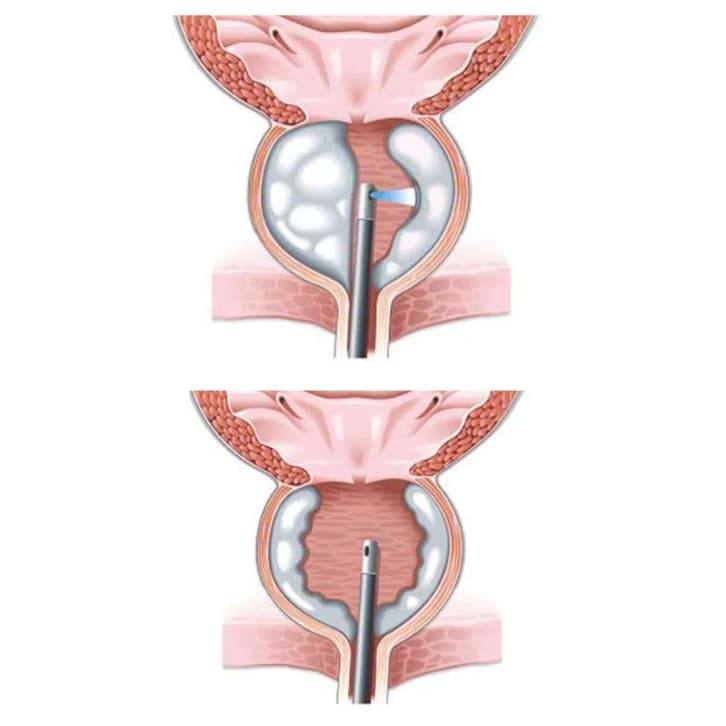
Choosing the right prostatic hyperplasia treatment depends on symptom severity, prostate size, overall health, and—most importantly—the patient’s quality of life. In my clinical approach, treatment is always individualized. Not every patient requires immediate intervention, but every patient deserves a clear explanation of their options and realistic expectations regarding outcomes. Effective benign prostatic hyperplasia symptoms treatment is about timing, precision, and balance.
In patients with mild symptoms that do not significantly interfere with daily life, treatment may not be immediately required. This approach, often referred to as active surveillance, involves regular follow-up to monitor symptom progression and prostate changes over time.
During this phase, I focus on guiding patients through lifestyle adjustments that can reduce symptom burden, such as fluid management, bladder training, and avoiding substances that worsen urinary irritation. Active surveillance is not “doing nothing”; it is a structured strategy designed to preserve quality of life while avoiding unnecessary treatment.
When symptoms become more persistent or bothersome, medication is often the next step in prostatic hyperplasia treatment. The most commonly used drug classes include:
While medical therapy can be highly effective, it also has limitations. Not all patients respond the same way, and potential side effects must be considered. This is why treatment selection should always be guided by a thorough evaluation and ongoing follow-up.
When medication fails to provide adequate relief or when complications arise, procedural intervention becomes necessary. Indications include severe symptoms, recurrent urinary retention, bladder dysfunction, or compromised kidney function.
Modern prostatic hyperplasia treatment has evolved significantly. Today, we rely on minimally invasive and surgical techniques that are designed to be patient-centered, effective, and safe. These approaches aim to relieve obstruction while preserving urinary control and sexual function whenever possible.
The primary goal of these interventions is not simply anatomical correction, but meaningful symptom relief and long-term improvement in quality of life. Selecting the appropriate procedure requires experience, careful patient selection, and a clear understanding of individual expectations.
Many patients ask me how to prevent benign prostatic hyperplasia. From a medical perspective, it is important to be precise: prostate enlargement associated with aging cannot always be prevented. However, its impact can often be reduced, and symptom progression may be slowed through evidence-based strategies.
Lifestyle choices play a meaningful role in prostate health. Maintaining regular physical activity helps regulate hormones, reduce inflammation, and improve metabolic function—all factors associated with prostate enlargement. Avoiding prolonged sitting and incorporating moderate exercise into daily routines can make a measurable difference over time.
A balanced diet rich in vegetables, lean proteins, and healthy fats supports overall urological health. Excess body weight has been linked to more severe urinary symptoms, making weight management a critical component of long-term care. In my experience, patients who address metabolic health often report better symptom control alongside medical treatment.
One of the most effective strategies is regular urological evaluation. Routine check-ups allow us to detect changes early, monitor symptom progression, and intervene before complications develop. This proactive approach is particularly important for men over 50 or those with a family history of prostate conditions.
While complete prevention may not always be possible, early detection remains the most powerful tool we have. Identifying prostatic hyperplasia in its early stages expands treatment options, reduces the need for invasive procedures, and preserves quality of life. In prostate health, timely evaluation is not optional, it is essential.
For patients seeking advanced and effective options, benign prostatic hyperplasia laser treatment in Colombia has become a highly valued alternative. Laser-based procedures are designed to precisely relieve prostate obstruction while minimizing bleeding, reducing recovery time, and preserving urinary and sexual function. From a medical perspective, this approach is especially beneficial for patients who have not achieved adequate symptom control with medication or who wish to avoid more invasive surgery.
As a urologist, I have incorporated laser technology into my clinical practice as part of a comprehensive and patient-centered approach to prostatic hyperplasia treatment. I am Carlos Velásquez, and laser treatment is one of the therapeutic options I offer after a thorough evaluation of each patient’s condition. Medellín, Colombia, provides an excellent medical environment for this type of advanced urological care, combining modern technology with specialized expertise and personalized attention focused on long-term symptom relief and quality of life.
As a urologist, my approach to prostatic hyperplasia is grounded in specialized training, clinical experience, and a deep commitment to evidence-based medicine. I focus on understanding each patient’s condition in detail, recognizing that no two cases are the same. From early-stage symptoms to complex presentations, my goal is always to offer clear guidance, precise diagnosis, and individualized treatment strategies that prioritize both effectiveness and long-term quality of life. I believe that trust is built through transparency, careful evaluation, and taking the time to explain every decision in a way that patients can truly understand.
Medellín has become a recognized destination for high-quality medical care, and I am proud to contribute to that standard through a patient-centered practice that combines modern urology with compassionate attention. Patients who seek my care for prostatic hyperplasia treatment can expect comprehensive evaluations, thoughtful follow-up, and a professional environment where their concerns are heard and addressed with respect. My commitment is not only to treat a condition, but to support each patient throughout their journey with clarity, confidence, and medical excellence.
Prostatic hyperplasia is a condition characterized by the non-cancerous enlargement of the prostate gland. As the prostate grows, it can compress the urethra, which interferes with the normal flow of urine. This obstruction explains why many patients experience urinary symptoms that progressively affect daily activities, sleep quality, and overall comfort. While the condition is benign, its impact on quality of life can be significant if not properly managed.
No, they are not in the same condition. Benign prostatic hyperplasia is a non-malignant enlargement of the prostate and does not mean cancer is present. However, both conditions can coexist and may share similar symptoms. This is why proper evaluation is essential—to accurately differentiate between benign enlargement and more serious prostate conditions.
The most frequent symptoms of benign prostatic hyperplasia include weak urine stream, difficulty starting urination, increased urinary frequency, urgency, nocturia, and the sensation of incomplete bladder emptying. These symptoms tend to worsen gradually over time and vary in intensity depending on prostate size and bladder function.
Although prostate growth can start early in adulthood, clinically relevant prostatic hyperplasia symptoms most commonly appear after the age of 50. The likelihood and severity of symptoms increase with age, making regular urological evaluation especially important in older men.
The primary causes of benign prostatic hyperplasia are hormonal changes related to aging, particularly the prolonged effect of dihydrotestosterone (DHT) on prostate tissue. Genetics, lifestyle factors such as obesity and physical inactivity, and chronic conditions like diabetes and cardiovascular disease also contribute to prostate enlargement.
Diagnosis involves a comprehensive evaluation that includes medical history, symptom scoring, physical examination, PSA testing when appropriate, and imaging or functional studies such as ultrasound and uroflowmetry. This structured approach ensures accurate diagnosis and helps guide appropriate prostatic hyperplasia treatment.
Prostatic hyperplasia treatment ranges from active surveillance and lifestyle modifications to medical therapy and, in more advanced cases, minimally invasive or surgical procedures. Treatment selection depends on symptom severity, prostate size, overall health, and patient preferences, with the goal of improving urinary function and quality of life.
Yes. Many patients achieve effective symptom control through medication and lifestyle adjustments. Medical therapy is often the first-line option for moderate symptoms and can significantly improve urinary flow and comfort. Surgical or procedural treatments are reserved for cases where conservative approaches are insufficient or complications develop.
While it may not always be possible to fully prevent prostate enlargement, understanding how to prevent benign prostatic hyperplasia focuses on reducing its impact. Maintaining a healthy weight, exercising regularly, managing metabolic conditions, and attending routine urological check-ups can help slow progression and improve symptom control.
You should seek urological evaluation as soon as urinary symptoms appear, even if they seem mild. Early assessment allows for timely diagnosis, broader treatment options, and better long-term outcomes. In prostate health, early detection and professional guidance make a meaningful difference.
Benign prostatic hyperplasia does not directly cause erectile dysfunction. However, both conditions often coexist because they share common risk factors such as aging, vascular disease, and metabolic disorders. Additionally, the psychological impact of urinary symptoms and certain medications used to treat prostate enlargement may influence erectile function. A proper evaluation helps differentiate the cause and select treatments that preserve both urinary and sexual health.
Prostatic nodular hyperplasia refers to the microscopic and structural changes within the prostate that lead to the formation of nodules, which are characteristic of benign prostate enlargement. This nodular growth pattern contributes to urethral compression and urinary obstruction. While the term is often used in pathological descriptions, it represents the same benign process commonly referred to as prostatic hyperplasia in clinical practice.
Prostatic hyperplasia complications develop when urinary obstruction is left untreated. These may include recurrent urinary tract infections, bladder stones, chronic urinary retention, and progressive bladder dysfunction. In advanced cases, kidney damage may occur due to sustained pressure in the urinary tract. Early diagnosis significantly reduces the risk of complications.
Yes, prostatic nodular hyperplasia can progress over time. Without monitoring or treatment, continued nodular growth may worsen urinary symptoms and increase the risk of complications. Regular follow-up allows timely intervention and helps preserve bladder and kidney function.
Some prostatic hyperplasia complications are reversible if identified early. For example, symptom relief and bladder function may improve once obstruction is treated. However, prolonged urinary retention or kidney damage may lead to permanent changes, which is why early evaluation is critical.
Treatment of benign prostatic hyperplasia primarily aims to relieve urinary symptoms, but improving comfort and sleep quality can have a positive indirect effect on sexual function. Choosing the appropriate treatment strategy is essential to minimize sexual side effects and maintain overall quality of life.
Diagnosis involves clinical evaluation, imaging, and sometimes histological analysis when tissue samples are obtained. While nodular hyperplasia is often confirmed pathologically, imaging studies and symptom assessment guide treatment decisions in everyday clinical practice.
Acute urinary retention, severe pain, fever associated with urinary infection, or sudden inability to urinate should be considered urgent situations. These symptoms require immediate medical attention to prevent serious complications.

 Escríbeme
Urólogo
¿Tienes dudas o preguntas?
¡Escríbeme ahora!

