

Medical author
Dr. Carlos Velásquez
Urologist
Specialist in the diagnosis and treatment of conditions affecting the male urinary system
Medellín, Colombia
Living with an enlarged prostate can affect much more than urination—it can interrupt your sleep, limit your daily activities, and make travel feel increasingly difficult. For international patients considering prostate laser surgery in Medellín, the decision often involves more than choosing a procedure: you also need clear information about safety, recovery time, expected costs, and how your medical care will be coordinated before and after arriving in Colombia.
As a urologist, I evaluate each case individually to determine whether prostate laser surgery may be an appropriate minimally invasive option. If you are exploring BPH treatment abroad or looking for prostate surgery for international patients, I can review your medical history and available test results before your trip, explain the possible treatment options, and help you plan the next steps. Contact my medical team to request an initial evaluation and receive guidance based on your specific condition.
What Is Prostate Laser Surgery and When Is It Recommended?
When urinary symptoms begin to control your sleep, routines or ability to travel comfortably, it may be time to look beyond temporary relief. Prostate laser surgery is one of the options I may consider when an enlarged prostate is creating a significant obstruction and medication is no longer providing the improvement a patient need.
A Minimally Invasive Way to Treat an Enlarged Prostate
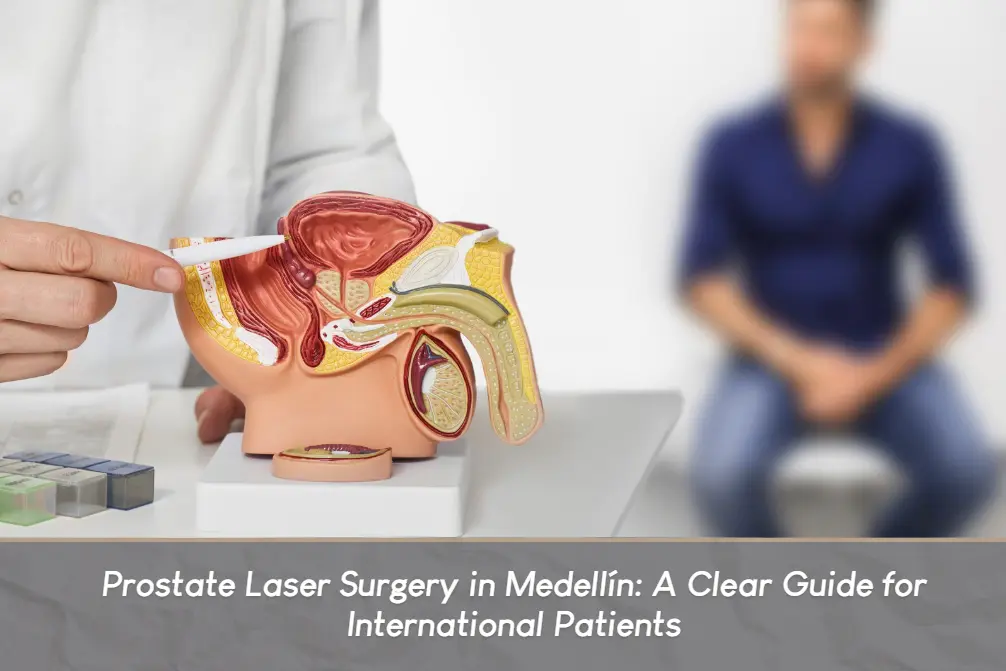
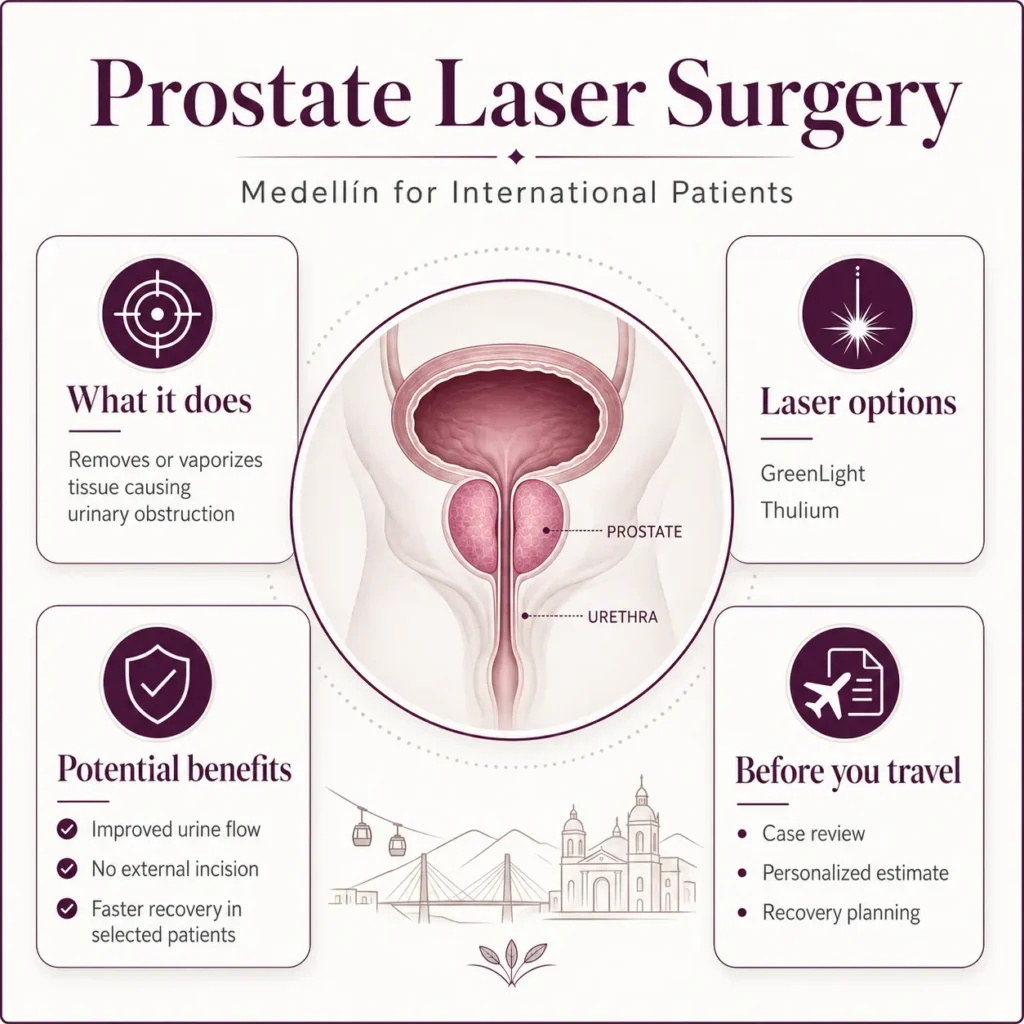
Laser prostate surgery is performed through the urethra, the natural channel that carries urine out of the bladder. This means that external abdominal incision is generally not required. Using a thin endoscopic instrument, laser energy is applied to the prostate tissue that is narrowing the urinary passage.
Depending on the selected technique, the laser can vaporize, cut or separate the obstructing tissue. The goal of this laser treatment for an enlarged prostate is to create more space for urine to flow and reduce the effort required to empty the bladder. Procedures may also be described as BPH laser surgery, minimally invasive prostate surgery or laser surgery for benign prostatic hyperplasia. Current European urology guidelines classify laser vaporization and laser enucleation as surgical options for appropriately selected patients with urinary obstruction.
How the procedure works
| Step | What happens |
|---|---|
| Access | A narrow surgical scope is introduced through the urethra. |
| Laser treatment | Laser energy targets the prostate tissue blocking the urinary channel. |
| Improved passage | The obstructing tissue is vaporized or removed to help urine flow more freely. |
The exact approach is not the same for every patient. Before recommending surgery, I evaluate the prostate size, the severity of the obstruction, bladder function, previous treatments, medications and overall health.
Signs That Medication May No Longer Be Enough
Medication can control urinary symptoms for many men, especially during the earlier stages of prostate enlargement. However, I may discuss a surgical option when symptoms remain troublesome despite treatment or when the obstruction begins to cause complications.
A quick symptom check
You should consider a urological evaluation if you are experiencing one or more of the following:
- A weak, slow or interrupted urine stream
- Difficulty starting urination
- Frequent trips to the bathroom during the night
- A persistent feeling that the bladder has not emptied
- Repeated episodes of urinary retention
- Symptoms that continue despite taking medication
- Recurrent urinary infections
- Bladder stones, bleeding or other complications related to obstruction
Surgery is more likely to be considered when urinary retention becomes recurrent or difficult to treat, when infections or bladder stones repeatedly occur, or when conservative and medical treatments no longer provide adequate relief. The most appropriate procedure will still depend on the individual findings of the patient.
Important:
Having these symptoms does not automatically mean that you need surgery. Similar urinary problems can have different causes, and the decision must be based on a complete evaluation rather than symptoms alone.

You might be interested in: Prostatic Hyperplasia: A Urologist’s Guide to Symptoms and Care
Learn more: Prostate Laser Surgery Explained: Benefits, Techniques, and What to Expect
Green Light and Thulium Laser Options for BPH
Patients often contact me asking for a specific laser by name. Some have read about Green Light laser prostate surgery, while others have been advised to consider a thulium procedure. Although both approaches use laser energy to relieve urinary obstruction caused by an enlarged prostate, they do not remove or treat the tissue in the same way.
Green Light Laser Prostate Surgery
The Green Light prostate procedure is commonly associated with photo selective vaporization of the prostate, also known as PVP prostate surgery. During the procedure, laser energy is used to vaporize obstructive prostate tissue and create a wider channel for urine to pass through.
You may also see this treatment described online as green laser prostate treatment, prostate laser vaporization or Green Light therapy for BPH. These terms usually refer to the same general principle: reducing the tissue that is compressing the urethra without making an external incision.
European urology guidelines recognize Green Light vaporization as a surgical alternative for appropriately selected men with moderate-to-severe urinary symptoms caused by benign prostate obstruction. The evidence also suggests potential advantages in catheterization time, hospital stay and control of bleeding, although outcomes depend on the prostate, the equipment used and the patient’s overall condition.

Thulium Laser Prostate Surgery
Thulium laser prostate surgery is a broader term because thulium energy can be used in different ways. Depending on the selected technique, the surgeon may cut, vaporize or separate the enlarged tissue from the prostate capsule.
One of these approaches is thulium laser enucleation. During a laser enucleation of the prostate, the obstructing portion is separated and removed through an endoscopic instrument. This may also be described as endoscopic prostate enucleation.
Current European guidelines distinguish between thulium vapor section, vapoenucleation and enucleation. This distinction matters because the amount of tissue treated, the surgical process and the recovery plan may vary between techniques.
Green Light vs. Thulium: Understanding the Difference
| Treatment option | How it treats the obstruction | Terms you may see online |
|---|---|---|
| GreenLight laser | Commonly vaporizes obstructive tissue to widen the urinary channel. | GreenLight PVP Green laser prostate Prostate laser vaporization |
| Thulium laser | Can cut, vaporize or enucleate tissue, depending on the selected technique. | ThuLEP Thulium vaporesection Thulium laser enucleation |
This comparison is only a starting point. It does not mean that one laser is universally better than the other.
Which Laser Technique May Be Right for You?
I do not recommend a technique based only on its commercial name or on what another patient received. Before discussing surgery, I need to understand the cause and severity of the obstruction and how it is affecting the bladder.
The decision may depend on:
- Prostate size and shape.
- Severity of urinary symptoms.
- Amount and location of the obstructing tissue.
- Bladder strength and emptying capacity.
- Previous medications or prostate procedures.
- Use of anticoagulants or antiplatelet medication.
- General health, anesthesia risk and medical history.
- The experience and equipment available for the selected technique.
The use of blood-thinning medication is especially important and must be reviewed individually. Laser procedures may be considered in selected patients receiving anticoagulants, but the supporting evidence, bleeding risk and medication plan differ between techniques. Patients should never discontinue these medications without instructions from their treating physicians.
My approach:
I first review your symptoms, prostate studies, bladder function, medications and treatment goals. Only then can I explain whether Green Light, thulium laser or another option is more appropriate for your case.
Benefits of Minimally Invasive Prostate Surgery
The main objective of minimally invasive prostate surgery is not simply to use newer technology. It is to relieve the obstruction while reducing the physical impact of the procedure whenever the patient’s condition allows it.
Less Disruption, No External Incision
Laser prostate procedures are performed through the urethra, so they generally do not require an external abdominal incision. For selected patients, potential advantages may include:
- A lower risk of significant bleeding.
- A shorter hospital stay.
- Less time with a urinary catheter.
- Faster recovery than more invasive prostate surgery.
- Earlier improvement in urinary flow.
- A more predictable return to basic daily activities.
Mayo Clinic notes that prostate laser surgery may offer less bleeding, a shorter or outpatient hospital stay, quicker recovery and reduced catheterization compared with TURP or open prostate surgery. These are potential advantages rather than guarantees, and the patient’s recovery can still vary according to the technique and clinical condition.
Potential Benefits at a Glance
| What may improve | What it could mean in daily life |
|---|---|
| Urinary flow | Less effort and waiting when starting to urinate. |
| Bladder emptying | Less sensation that urine remains after using the bathroom. |
| Nighttime symptoms | Fewer interruptions to sleep in patients who respond well. |
| Urinary retention risk | Less likelihood of another obstruction-related episode. |
| Daily confidence | Greater comfort when working, exercising or traveling. |
A Treatment Designed to Improve Urinary Flow
For many patients, the most meaningful result is not the name of the laser. It is being able to sleep with fewer interruptions, use the bathroom without prolonged straining and leave home without constantly planning where the next restroom will be.
However, improvement is not identical for everyone. Persistent urgency or frequency can sometimes be related to bladder dysfunction rather than prostate obstruction alone. This is why I assess bladder emptying and the complete urinary history before suggesting surgery.
A successful procedure begins with the correct diagnosis. Removing prostate tissue may improve obstruction, but it cannot correct every possible cause of urinary symptoms.
What Does Prostate Surgery Cost in Colombia?
Cost is understandably one of the first questions international patients ask. Many people arrive at my website after searching for prostate surgery cost Colombia, prostate laser surgery cost Colombia or affordable prostate surgery abroad.
It is reasonable to compare treatment options, but the total cost should always be considered together with the procedure, hospital care, medical preparation and postoperative follow-up.
What Is Included in a Personalized Surgical Estimate?
The final laser prostate surgery cost may depend on several components:
- The recommended laser technique.
- Prostate size and surgical complexity.
- Hospital and operating room charges.
- Anesthesia and anesthesiology evaluation.
- Preoperative laboratory and diagnostic testing.
- Medications and surgical supplies.
- Required hospitalization.
- Temporary catheter care.
- Postoperative consultations.
- Additional studies or treatment required by other medical conditions.
What shapes the final estimate?
| Clinical factors | Hospital factors | Follow-up factors |
|---|---|---|
| Prostate size and anatomy | Operating room and equipment | Postoperative consultations |
| Type of laser procedure | Anesthesia | Catheter management |
| Medical history | Length of hospitalization | Additional testing, if needed |
Why There Is No Single Price for Every Patient
Publishing one universal price for BPH surgery in Colombia could create the wrong expectation. Two patients with similar urinary symptoms may have different prostate sizes, bladder conditions, medications or anesthesia risks.
A lower surgical quote may also exclude examinations, hospital charges, anesthesia or follow-up. For that reason, I recommend comparing what is included in the complete treatment plan rather than looking only at the procedure fee.
I can provide more useful guidance after reviewing the available medical information and identifying which treatment may reasonably be considered. A preliminary review can help orient the process, although the final surgical recommendation must be confirmed through an appropriate medical evaluation.
Requesting an Estimate Before Traveling
International patients can begin by gathering:
- A summary of their medical history.
- A description of their current urinary symptoms.
- A complete medication list.
- Recent PSA results.
- A prostate or urinary tract ultrasound.
- Uroflowmetry or bladder-emptying studies, when available.
- Previous urological or surgical reports.
- Relevant laboratory results.
Missing one of these documents does not necessarily prevent an initial review. I can indicate which examinations may be needed before making final travel or treatment arrangements.
Send your medical records for an initial case review and receive personalized guidance about the possible procedure, expected costs and recommended stay in Medellín.
Why Travel to Medellín for BPH Treatment Abroad?
Choosing BPH treatment abroad is a medical decision before it is a travel decision. The most important question is not simply whether surgery costs less in another country. You should also consider the specialist’s experience, the hospital setting, communication, preparation, postoperative care and what will happen if your recovery does not follow the expected course.
Specialized Urological Care at a More Accessible Cost
Some international patients consider Colombia because specialized private healthcare may be financially more accessible than treatment in their home countries. However, I do not recommend choosing a procedure based on price alone.
A responsible comparison should include:
- The surgeon’s evaluation and experience.
- The laser technique being proposed.
- Hospital and anesthesia services.
- Preoperative testing.
- Follow-up before returning home.
- Communication after the procedure.
- Possible additional costs if the stay must be extended.
Medellín has continued to develop its healthcare and wellness tourism sector, including services intended to support international patients and coordination between healthcare and hospitality providers.
Medellín as a Practical Destination for Medical Care
Medellín is served by José María Córdova International Airport, which maintains domestic and international routes and connections with cities outside Colombia. Routes can change, so patients should confirm current schedules directly with the airline before arranging surgery.
The city also offers private healthcare services and a hospitality sector accustomed to receiving international visitors. Once the medical dates are confirmed, accommodation can be selected according to the location of the hospital, the planned controls and whether the patient will travel with a companion.
For me, the purpose of planning is not to turn surgery into a tourist package. It is to make sure that the patient arrives with realistic expectations, completes the necessary medical steps and has enough time for an initial postoperative assessment before returning home.
Why Choose Dr. Carlos Velásquez for Prostate Laser Surgery in Medellín?
When an international patient contacts me about prostate laser surgery in Medellín, I do not recommend Green Light, Thulium or any other technique based only on the name of the procedure. I first review the symptoms, prostate size, degree of urinary obstruction, bladder function, previous treatments, medical history and expectations regarding recovery and sexual function. This allows me to determine whether laser surgery is truly appropriate and, if so, which option may offer the best balance between effectiveness, safety and recovery for that specific patient.
I also help patients prepare before traveling by reviewing available medical records, identifying additional tests and explaining the possible hospital stay, catheter use, recovery period and postoperative follow-up. During the stay in Medellín, I provide direct medical guidance from the preoperative assessment through surgery and the first stages of recovery. My goal is to give you clear and honest information about expected urinary improvement, possible risks such as bleeding, infection or retrograde ejaculation, and any factors that may affect your return flight. If you are looking for prostate surgery for international patients, you can contact my team for an initial review and personalized guidance before planning your trip.
Frequently Asked Questions About Prostate Laser Surgery in Medellín
1. Is prostate laser surgery safe for international patients?
Prostate laser surgery can be a safe and effective option for appropriately selected patients, regardless of whether they live in Colombia or travel from another country. Safety depends on confirming the diagnosis, reviewing existing medical conditions, selecting the appropriate technique and completing the necessary preoperative assessment.
Before recommending surgery, I review factors such as prostate size, bladder function, medications, previous treatments and anesthesia risk. International patients also need a clear postoperative plan and sufficient time for follow-up before returning home. Current urological guidelines emphasize individualized assessment and shared decision-making when selecting surgical treatment for urinary symptoms caused by BPH.
2. How do I know whether I am a candidate for prostate laser surgery?
I may consider surgery when urinary symptoms remain bothersome despite medication or when prostate obstruction causes complications. These may include recurrent urinary retention, repeated urinary infections, bladder stones, visible blood in the urine or effects on the urinary system.
Symptoms alone are not enough to choose a procedure. I may need to review prostate imaging, post-void residual urine, urinary flow studies and other examinations to determine whether the prostate is truly causing the obstruction. The American Urological Association recommends evaluating prostate size and shape, bladder emptying and urinary flow before surgical intervention when clinically appropriate.
3. What is the difference between GreenLight and Thulium laser surgery?
GreenLight laser prostate surgery is commonly used to vaporize the excess tissue that is narrowing the urethra. It is also known as photoselective vaporization of the prostate or PVP. Rather than removing the entire prostate, the procedure creates more room for urine to flow through the urinary channel.
Thulium laser prostate surgery may involve vaporization, cutting or enucleation, depending on the technique selected. In thulium laser enucleation, the obstructing tissue is separated and removed endoscopically. These options are not interchangeable, and the choice should reflect the prostate size and anatomy, symptoms, bladder condition, medical history and surgeon’s experience.
4. Is laser surgery suitable for a large prostate?
Certain laser enucleation procedures may be considered for prostates of different sizes. Current American urological guidance identifies thulium and holmium laser enucleation as size-independent surgical options when performed by clinicians with appropriate expertise.
However, a large prostate does not automatically mean that one specific laser technique is the best choice. I must also consider its shape, the location of the obstructing tissue, bladder function, previous procedures and the patient’s overall surgical risk.
5. How much does prostate laser surgery cost in Colombia?
There is no single prostate laser surgery cost in Colombia that applies to every patient. The final estimate may vary according to the laser technique, prostate size, complexity of the procedure, hospital, operating room, anesthesia, examinations, hospitalization and postoperative care.
When comparing the prostate surgery cost in Colombia with treatment elsewhere, it is important to ask what the estimate includes. A lower initial quote may not include hospital services, anesthesia, supplies, consultations or follow-up. I can offer more accurate guidance after reviewing the case and determining which procedure may be appropriate.
6. Can I send my medical records before traveling to Medellín?
Yes. Reviewing your available medical information before the trip can help me understand your symptoms, identify missing studies and determine whether a surgical evaluation is reasonable.
Useful documents may include your medical history, medication list, PSA results, prostate ultrasound, uroflowmetry, post-void residual measurement and reports from previous urological treatments. This remote review helps with planning, but it does not replace an in-person examination or guarantee that surgery will be recommended. Urological guidelines support evaluating symptoms, prostate anatomy, bladder emptying, urinary flow, medications and general health before selecting surgical treatment.
7. How long should I stay in Medellín after prostate laser surgery?
The recommended stay depends on the procedure, catheter use, urinary recovery and your general health. Some patients progress quickly, while others need additional observation, testing or catheter management.
I recommend avoiding fixed or nonrefundable return arrangements until your case has been reviewed. Before you leave Medellín, I need to assess how you are urinating, whether bleeding or discomfort is improving and whether any complication requires further care.
8. Will I need a urinary catheter after the procedure?
Many patients need a urinary catheter temporarily after laser prostate surgery. It allows urine to drain while swelling and irritation begin to decrease. The duration varies according to the technique, the amount of tissue treated, bladder function and the patient’s early recovery.
Laser procedures may be associated with shorter catheterization than some traditional operations, but this is a potential advantage rather than a guarantee for every patient.
9. Does prostate laser surgery affect erections or ejaculation?
Erectile function and ejaculation are different. Surgery for BPH does not necessarily cause erectile dysfunction, but any prostate procedure can have sexual effects that should be discussed beforehand. Urological guidance recommends counseling patients about possible changes in sexual and ejaculatory function before surgery.
One of the most common changes is retrograde ejaculation, sometimes called a dry orgasm. This happens when semen enters the bladder instead of leaving through the penis. It is generally not painful and usually does not eliminate the sensation of orgasm, but it can affect fertility.
10. What should I expect during recovery?
Temporary burning during urination, urinary urgency, increased frequency and light blood in the urine may occur during the initial recovery period. Some patients also need a catheter for a short time. Other possible risks include urinary infection, temporary difficulty urinating and urethral narrowing caused by scar tissue.
Recovery is not identical for every patient. I provide individualized instructions regarding hydration, medication, physical activity, sexual activity, catheter care and follow-up. International patients should also receive medical guidance before taking a return flight rather than assuming they can travel immediately after surgery.
References
- European Association of Urology. (2026). EAU guidelines on the management of non-neurogenic male lower urinary tract symptoms (LUTS). Uroweb.
- Sandhu, J. S., Bixler, B. R., Dahm, P., Goueli, R., Kirkby, E., Stoffel, J. T., & Wilt, T. J. (2024). Management of lower urinary tract symptoms attributed to benign prostatic hyperplasia (BPH): AUA guideline amendment 2023. The Journal of Urology, 211(1), 11–19.
- Mayo Clinic Staff. (2023, July 22). Prostate laser surgery. Mayo Clinic.
Medical notice: This article is intended for informational and educational purposes only. It does not replace a consultation with a qualified healthcare professional. If you are experiencing persistent urinary symptoms, difficulty urinating, recurrent urinary retention, blood in the urine, or are considering prostate laser surgery, consult a urologist for a personalized evaluation. The diagnosis, recommended procedure, potential risks, recovery time, and expected results may vary from one patient to another.
Book your consultation with Dr. Carlos Velásquez — Urologist in Medellín